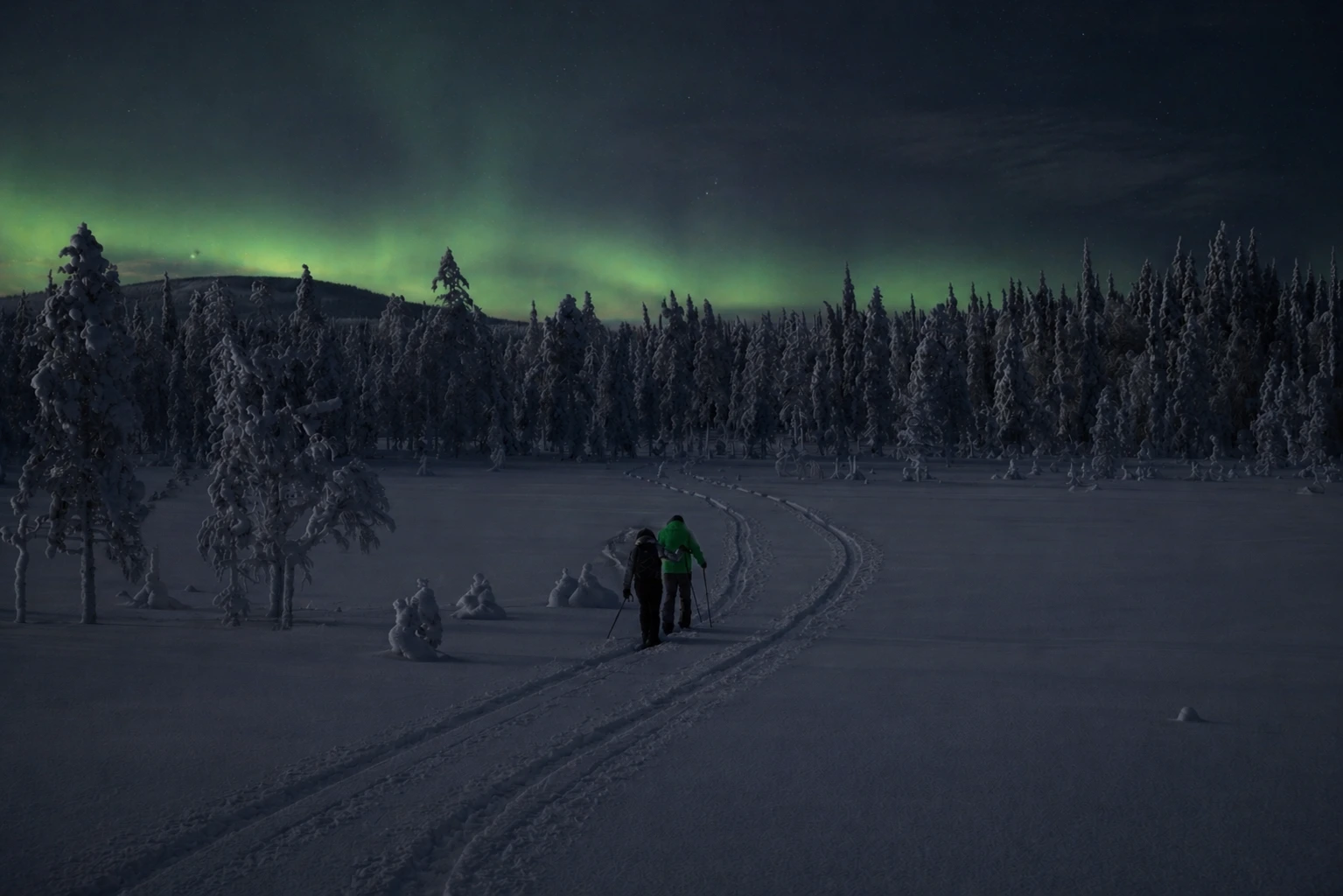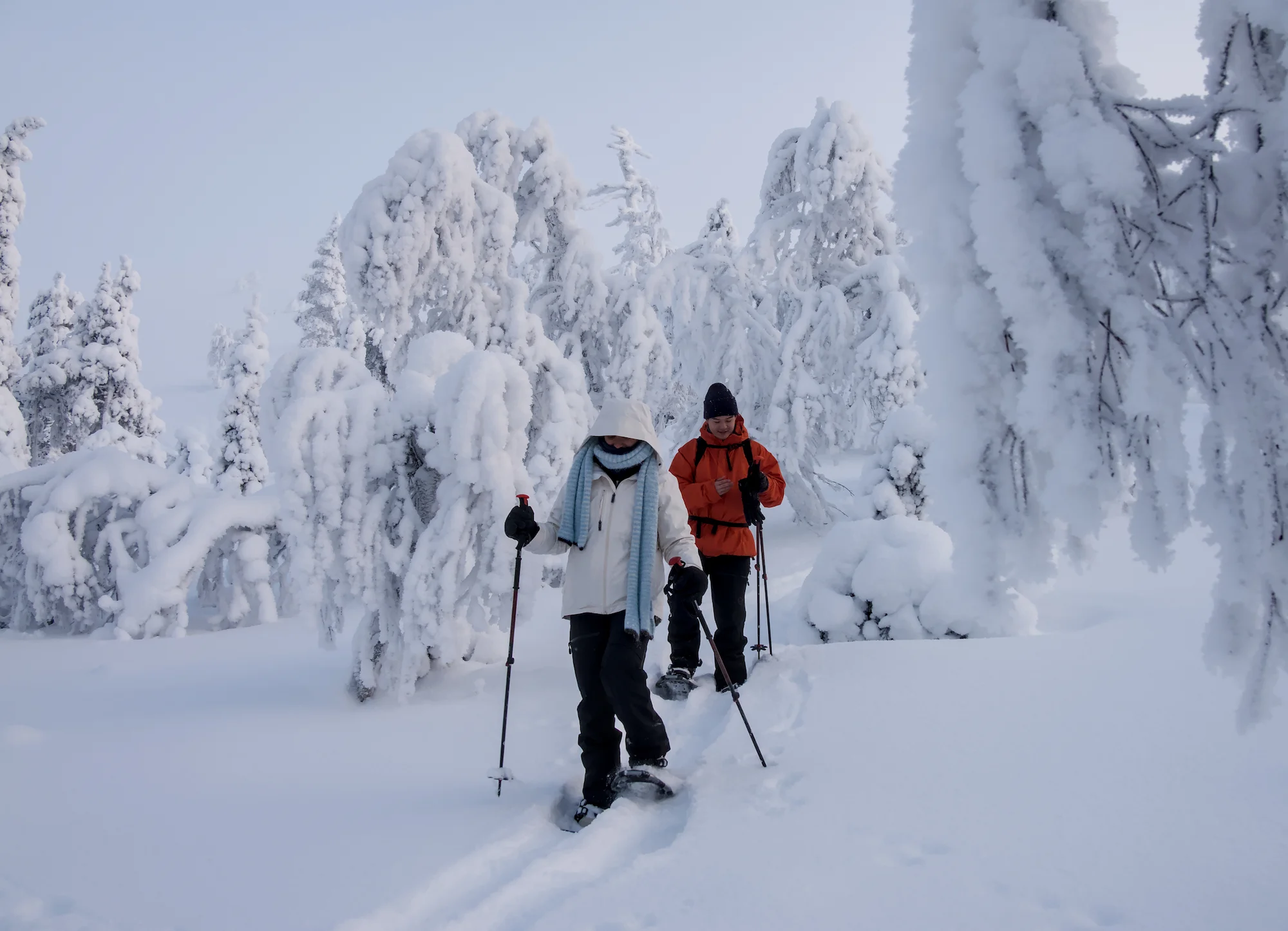
Snowshoeing is one of the most accessible winter activities in Finnish Lapland. In this guide, you’ll discover what the experience is really like around Ylläs, what equipment you’ll need and where to find the best landscapes. Around Ylläs, hundreds of kilometres of trails and untouched snow-covered landscapes make it one of the best places in Finland to discover this activity.
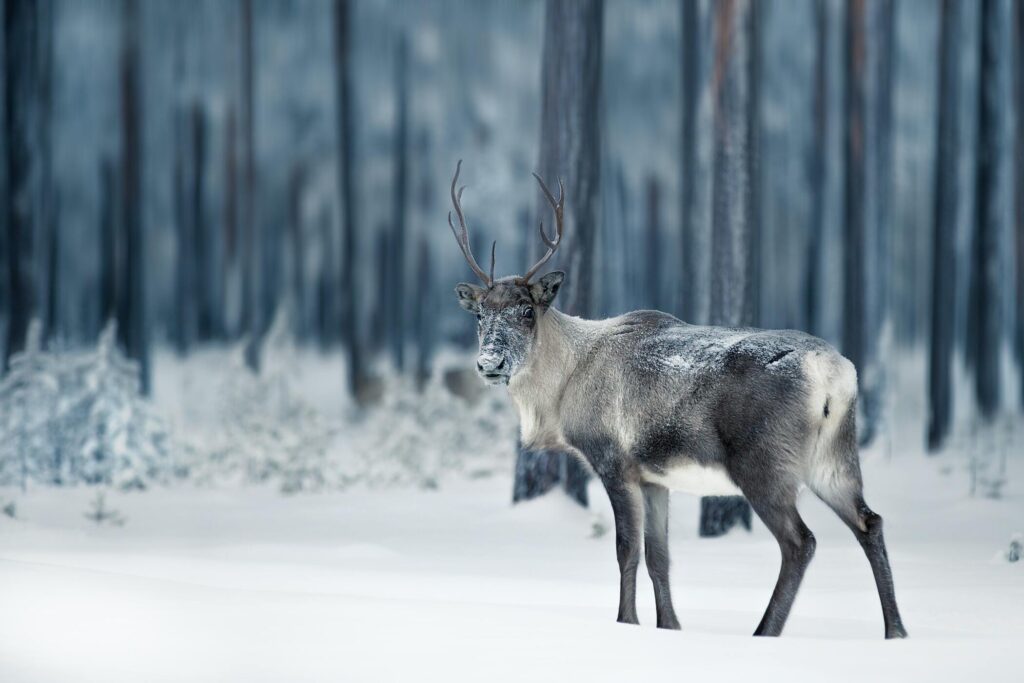
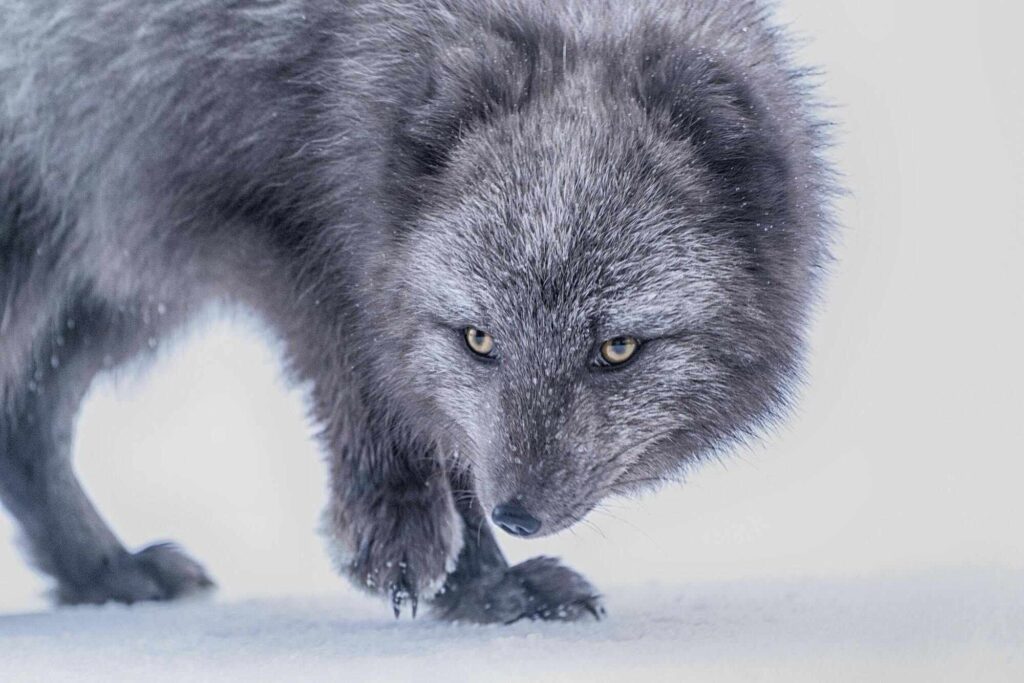
Let’s take a closer look at the diversity of wildlife that populates the territories of Lapland. From predators and woodland creatures to birds and water animals, we’ll see which Fauna you might be likely to encounter during your stay above the Arctic circle.
Why snowshoeing is perfect for beginners
One of the biggest advantages of snowshoeing is how accessible it is. Unlike skiing, snowshoeing requires no previous experience. Within a few minutes, you’ll be comfortably walking through silent forests, crossing frozen wetlands and climbing gentle fells with panoramic views over the surrounding wilderness.
Most visitors can learn the basics in just a few minutes. The snowshoes distribute your weight over a larger surface, preventing you from sinking deeply into the snow.
Unlike downhill skiing or snowboarding, there is no need to master complicated techniques before enjoying the landscape.
Whether you’re travelling as a family, a couple or on your own, snowshoeing offers an authentic way to explore Lapland at a slower pace.
Why Ylläs is perfect for snowshoeing
Ylläs is known for its rolling fells, old-growth forests and vast wilderness areas.
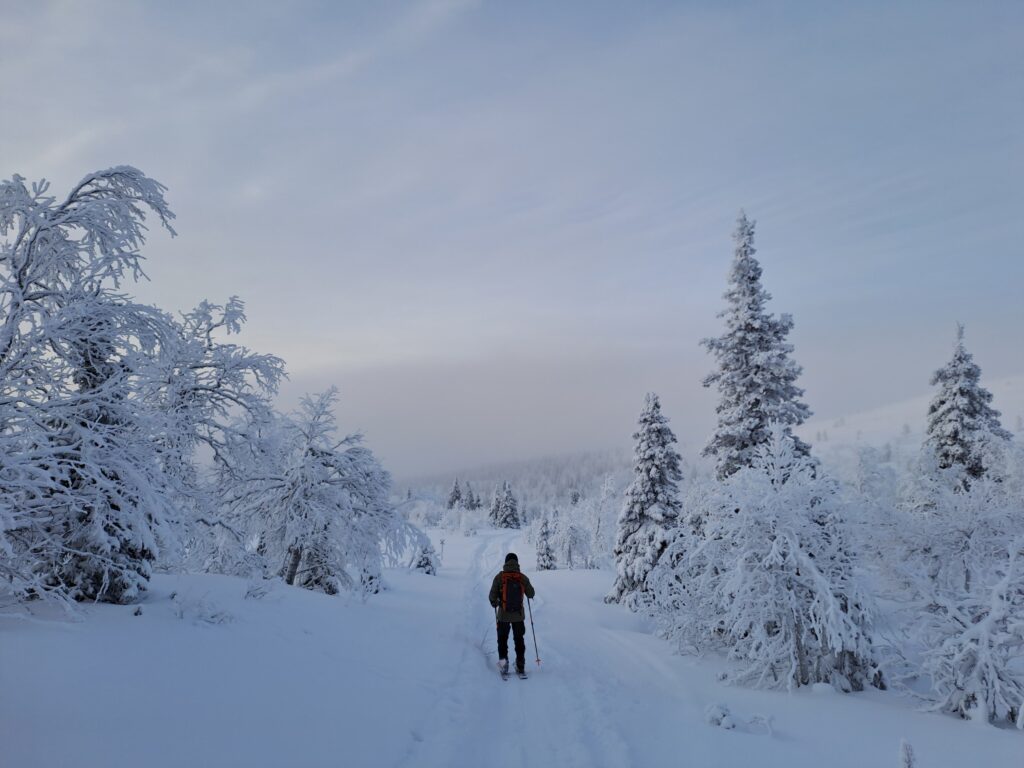
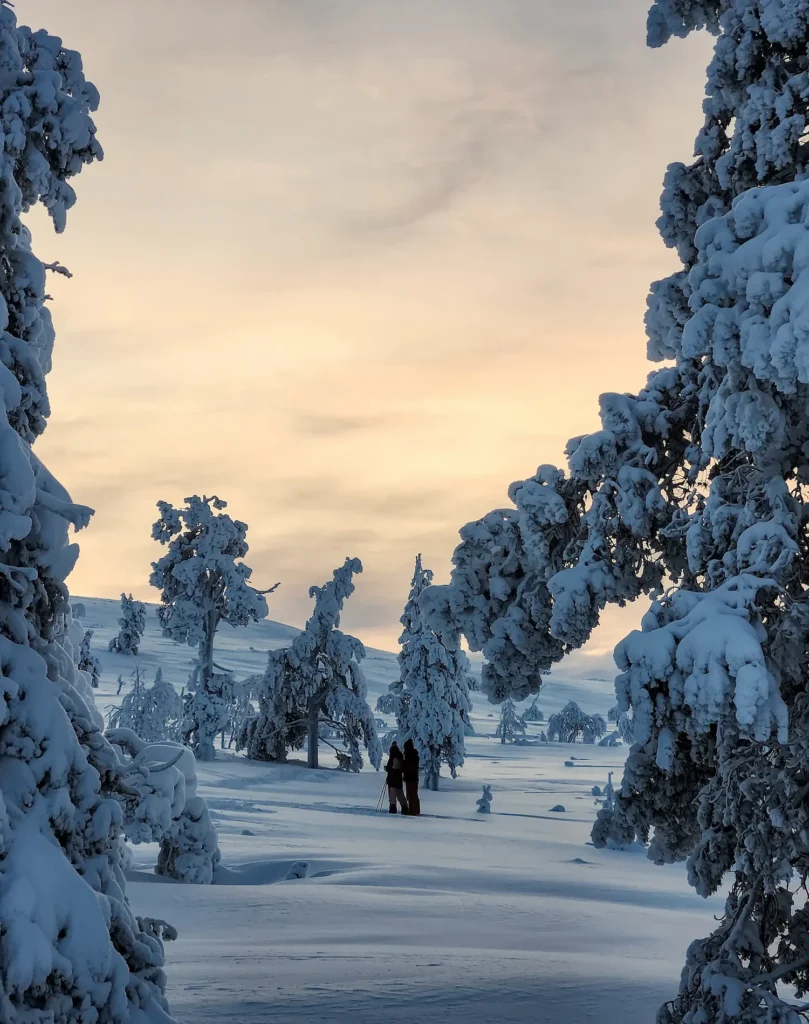
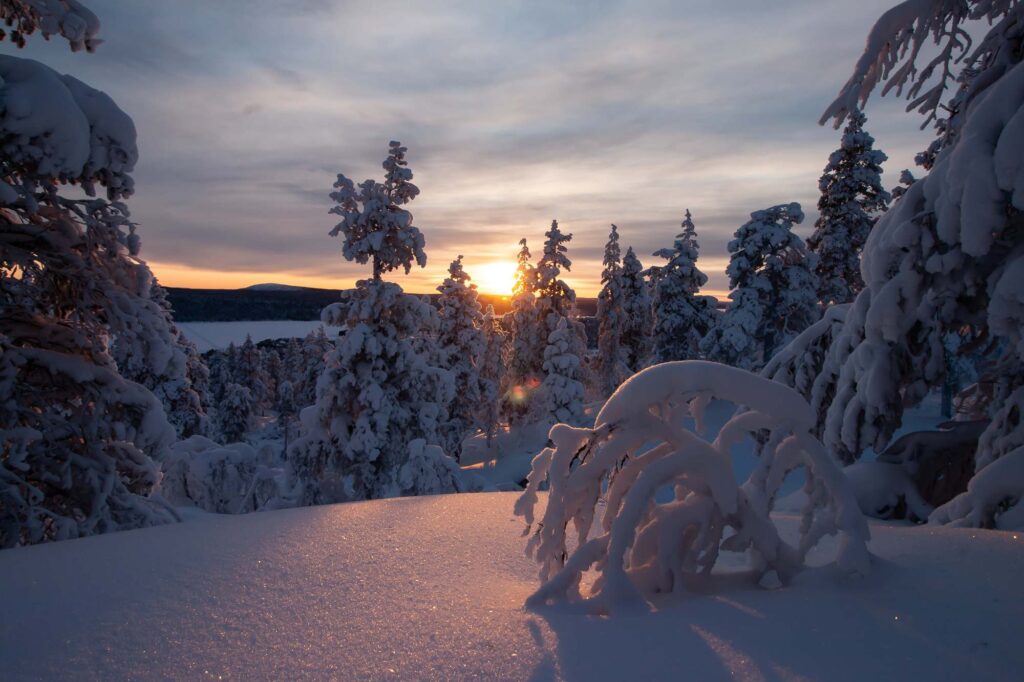
During winter, the trees become covered in thick layers of snow and ice, creating the famous “snow monster” formations often seen in Lapland photographs.
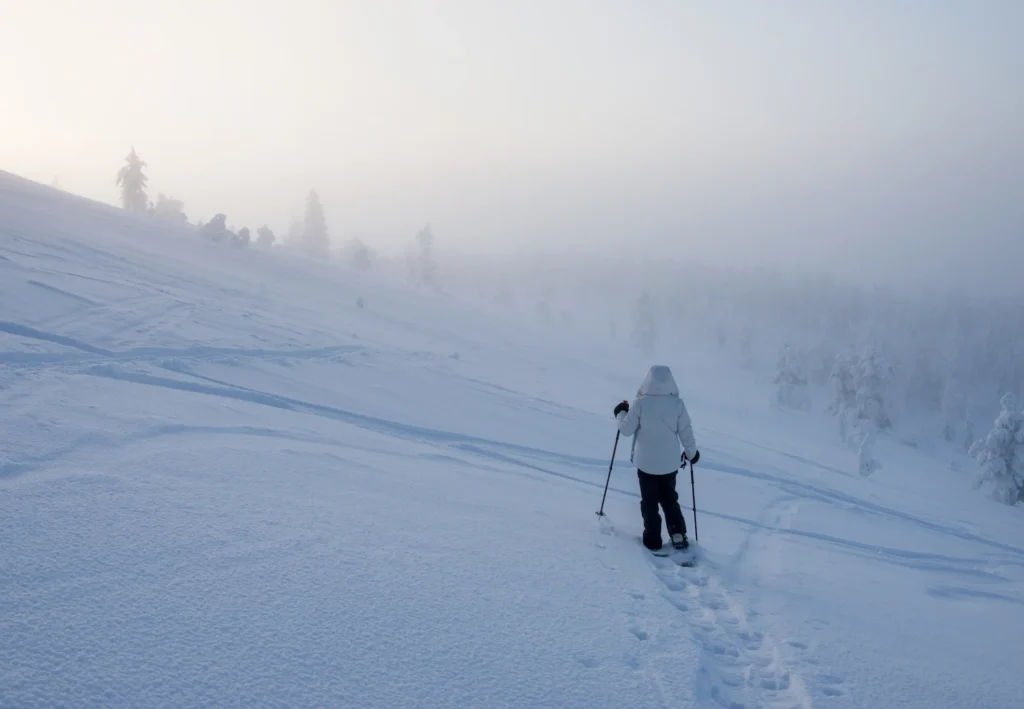
As you move away from the ski resort, the atmosphere changes quickly. The sounds of civilisation disappear, replaced by complete silence and the occasional call of a Siberian jay.
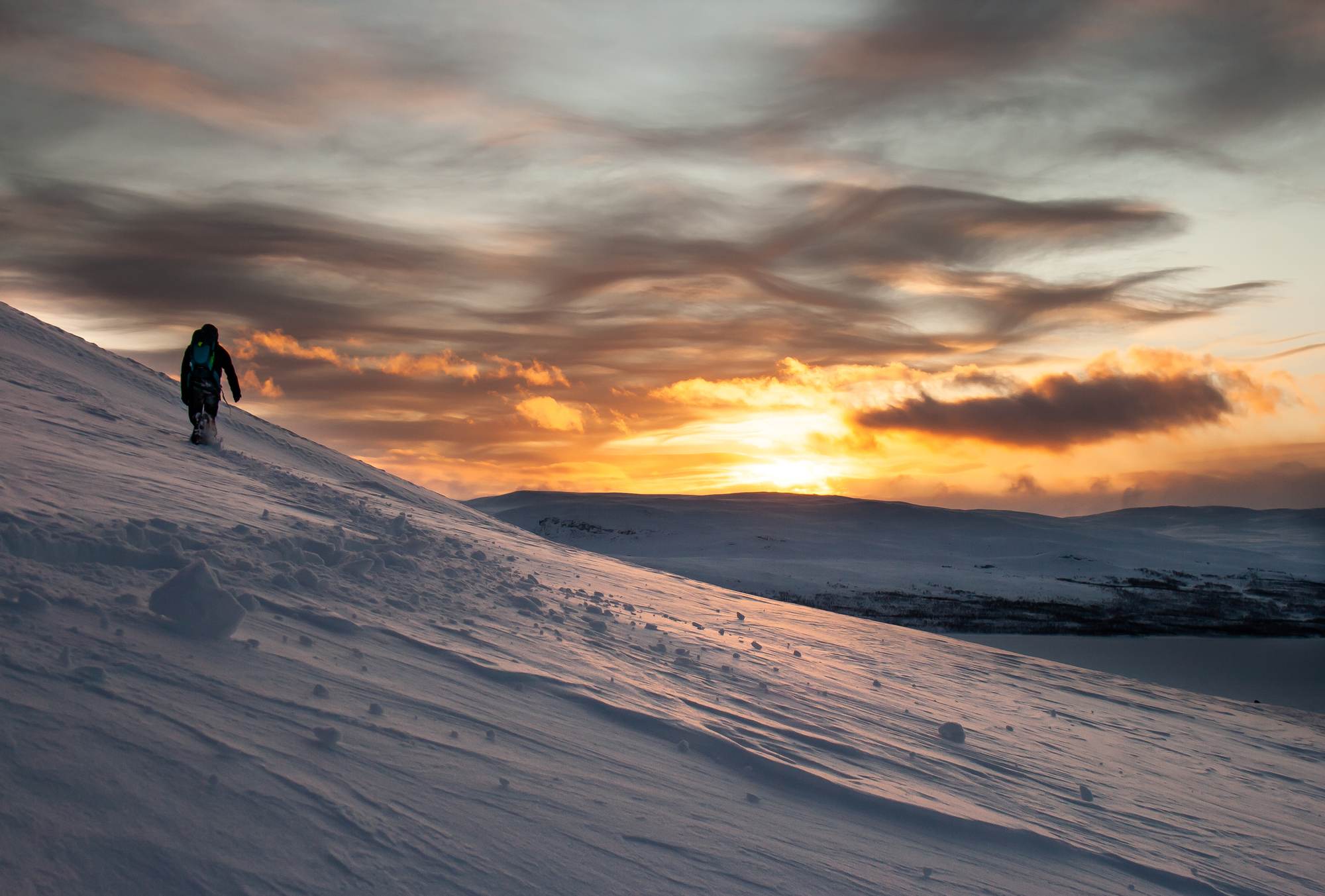
Many routes also offer spectacular views over the surrounding fells and national park landscapes.
Wildlife and nature encounters
Although wildlife can be difficult to spot during winter, tracks are everywhere.
Snowshoeing allows you to discover signs left by:
- Arctic hare
- Red fox
- Willow grouse
- Reindeer
- Moose
Your guide can often help identify tracks and explain how animals survive during the Arctic winter.
For many visitors, learning to read the landscape becomes one of the highlights of the experience.
What should you wear?
Staying comfortable in Lapland is mostly about layering properly. A typical winter outfit includes:
- Base layer
- Mid layer fleece or wool
- Insulated jacket
- Waterproof outer shell
- Warm gloves
- Winter boots
The good news is that snowshoeing is relatively active, so most people warm up quickly once they start moving.
Final thoughts
Snowshoeing offers one of the most authentic ways to experience Finnish Lapland. It doesn’t require technical skills or previous winter experience, yet it allows you to reach quiet forests, scenic fells and remote wilderness areas that remain inaccessible to most visitors.
Whether you’re looking for a peaceful walk through snowy forests or a memorable Arctic adventure, snowshoeing provides a unique connection with the landscapes that make Ylläs so special.